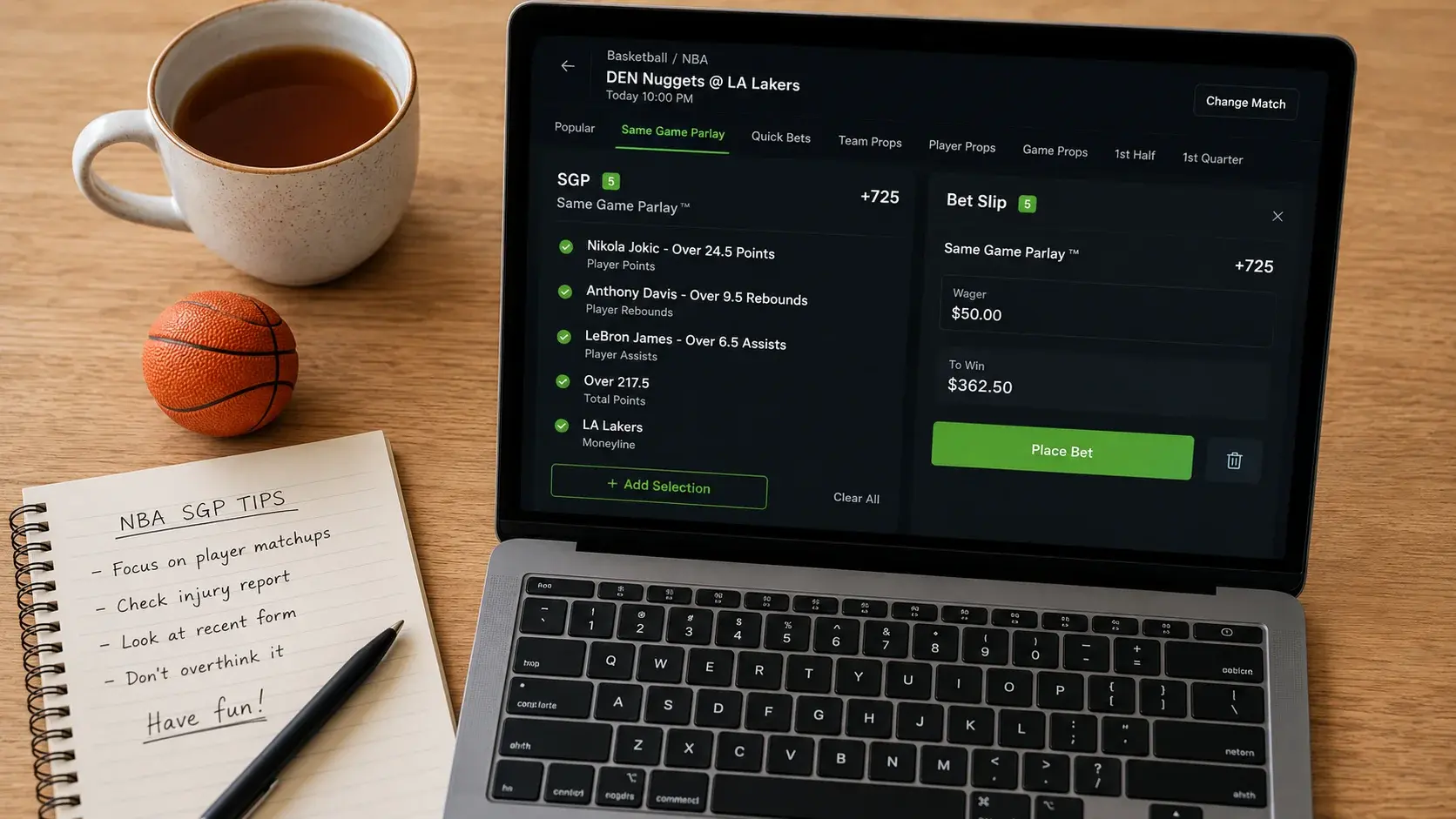


Interpreting NBA Point Spreads for Betting Value
I placed my first NBA spread bet in 2014, backing the Spurs at -5.5 against a depleted Miami squad. They won by 17. Easy money, I thought. The next night I took Golden State at -7 in what looked like an identical mismatch — and watched them win by exactly six. One point. That single point was the moment I stopped thinking about spread betting as “picking winners with a cushion” and started understanding what the number actually represents. If you are struggling to calculate your potential returns, make sure you have all NBA betting odds explained before placing your wager.
A point spread is not a prediction of the final margin. It is the bookmaker’s best estimate of the number that will split public opinion roughly down the middle, drawing equal action on both sides. The global sports betting market reached $100.9 billion in 2024 and is projected to hit $258.11 billion by 2033 — a staggering amount of money that moves through spread lines every single day. When you see Boston -6.5 against New York, the bookmaker is not saying Boston will win by seven. The bookmaker is saying that -6.5 is the margin where half of the betting public takes Boston and the other half takes New York. Your job is to figure out when that consensus is wrong.
This distinction matters because it shifts your entire approach. You are no longer asking “who wins this game?” You are asking “is the market’s view of the winning margin accurate?” Those are radically different questions, and the second one is where profitable NBA betting actually lives.
In the UK, spread betting on the NBA uses the term “handicap” — same concept, different label. If you have placed handicap bets on Premier League football, the mechanics are identical. The favourite receives a negative handicap (they must win by more than the set number), while the underdog receives a positive handicap (they can lose by fewer points than the spread, or win outright, and your bet still lands). The half-point matters enormously — it eliminates the possibility of a push, which is a drawn result where your stake is returned. At -6.5, there is no middle ground. You win or you lose.
Understanding this is the foundation of everything that follows in this guide. Every section below — from how lines are set to how ATS records expose value — builds on this single idea: the spread is a market, and markets can be mispriced.
How the Handicap Line Is Set and How It Moves
Roughly 290 million online bets on real-world events are placed every month in the UK alone. That volume of money does not flow passively — it reshapes the lines it touches. And the NBA spread is one of the most actively traded lines in all of sport.
The opening line for an NBA game typically appears 18 to 24 hours before tip-off at the major offshore books, though UK-licensed operators often post their numbers a few hours later. These opening lines are set by a small team of odds compilers who use proprietary power ratings — essentially a numerical ranking of every team’s strength, adjusted for home-court advantage, injuries, rest, and travel. The opening number is not sacred. It is a starting bid in a negotiation between the bookmaker and the market.
Within minutes of posting, sharp bettors — syndicates and professional gamblers who bet significant sums — begin testing the line. If Boston opens at -5.5 and sharp money immediately hammers Boston, the line moves to -6, then -6.5, sometimes higher. This initial movement is the most informative. It tells you where the people who do this for a living think the line was set incorrectly.
What follows over the next several hours is a tug-of-war. Public money — the casual bettor backing the popular team or following a tip — tends to arrive later in the day, often pushing lines in the opposite direction from the sharps. The line you see at 6pm UK time, roughly two hours before an Eastern Conference tip-off, is the product of thousands of individual bets pulling in different directions. The closing line — the final number available before the game starts — is widely considered the most efficient point. Research consistently shows that closing lines are better predictors of outcomes than opening lines, because they incorporate all available information and all available money.
For UK bettors, the timing creates a practical question: do you bet early to capture value before the line moves, or wait for the closing line to see where the market settles? I have spent over a decade watching this pattern, and my answer is annoyingly specific — it depends on why the line is moving. If it is moving on injury news (a star player ruled out), the direction is predictable and betting early on the right side captures genuine value. If it is moving purely on money flow without a clear catalyst, the closing line is usually sharper. Understanding how and why NBA lines shift is one of the most underrated skills in spread betting.
One more detail that trips up newcomers: NBA spreads can move through key numbers. In football, the numbers 3 and 7 dominate because of the scoring system. In basketball, every point matters roughly equally, but the numbers 5, 6, and 7 see slightly more final margins than others. A move from -6.5 to -7.5 crosses one of those key thresholds and changes the probability profile of the bet more than a move from, say, -8.5 to -9.5.
Reading NBA Spreads in Decimal Odds: UK Format
I cannot count the number of times a reader has emailed me asking why an NBA spread bet “only” paid 1.91 when they expected even money. The confusion almost always comes from the gap between how Americans discuss spreads and how UK bookmakers present them. Let me close that gap permanently.
In the United States, a standard spread bet is quoted at -110 in American odds, meaning you risk $110 to win $100. In the UK, the same bet appears as 1.91 in decimal odds. The decimal format is cleaner — it tells you the total return on a 1-unit stake, including your original stake. A winning 10-pound bet at 1.91 returns 19.10 pounds: your original 10 plus 9.10 in profit. The online segment accounts for 78.47% of UK sports betting revenue, and virtually every platform defaults to decimal odds, so this is the format you will encounter daily.
Here is a worked example using a real-world scenario. Suppose the line reads:
Milwaukee Bucks -4.5 at 1.91 versus Indiana Pacers +4.5 at 1.91
If you back the Bucks at -4.5, they need to win by 5 or more points for your bet to settle as a winner. A Bucks victory by exactly 4 loses. A Bucks victory by 5 returns 1.91 times your stake. Conversely, if you back the Pacers at +4.5, they can lose by up to 4 points and your bet still wins — or, of course, they can win outright.
The 1.91/1.91 pricing is the standard line. Both sides carry identical odds, and the bookmaker’s margin is embedded in the gap between the true probability and the implied probability of the odds. At 1.91, the implied probability is 52.36% — but since both sides cannot each have a 52.36% chance, the combined implied probability is 104.72%. That extra 4.72% is the overround, the bookmaker’s theoretical margin.
Not all spread bets are priced at 1.91/1.91. When a bookmaker wants to encourage action on one side without moving the spread number itself, they adjust the odds. You might see Milwaukee -4.5 at 1.87 and Indiana +4.5 at 1.95. The spread stays at 4.5, but the juice shifts — backing Milwaukee now costs you more relative to the potential profit, while Indiana becomes slightly cheaper. This is a subtler form of line movement that many bettors overlook entirely.
One practical tip: always calculate implied probability before placing a spread bet, not after. The formula is simple — divide 1 by the decimal odds and multiply by 100. At 1.91, you need to win 52.36% of the time to break even. At 1.87, the break-even threshold rises to 53.48%. These differences feel small on a single bet, but across a full 82-game NBA season, they compound into the difference between profit and loss.
ATS Records: The Metric Bookmakers Hope You Ignore
The average win rate for US bookmakers hit a record 9.7% in 2025. That number should terrify casual bettors and energise serious ones, because it reveals something critical: most people are betting badly, and the market inefficiencies they are missing are measurable.
ATS stands for Against The Spread, and an ATS record tracks how often a team covers the handicap line — not how often they win. A team can have a dominant 55-27 straight-up record but a mediocre 38-44 ATS record if they consistently win by fewer points than the spread suggests. Conversely, a struggling team that loses close games can be an ATS goldmine. The public bets on winners. The sharp money bets on value against the number.
Here is where ATS records become genuinely useful. At any point in the NBA season, you can find significant ATS splits by situation: home versus away, as a favourite versus as an underdog, on rest versus on a back-to-back, against division rivals versus non-division opponents. These splits are not random noise. They reflect genuine tendencies in how teams perform relative to market expectations.
Take a hypothetical example. A team sits at 25-15 ATS as an underdog across the current and previous season but only 12-20 ATS as a favourite. What does that tell you? It tells you the market consistently overvalues this team when they are expected to win and undervalues them when they are expected to lose. That is a pattern you can exploit — not on every game, but as a filter for identifying your strongest bets.
The mistake most people make with ATS data is treating it as predictive in isolation. A team’s ATS record from last season does not automatically carry over. Rosters change, coaching strategies evolve, and the market adjusts. What ATS records do is highlight teams the market is slow to recalibrate on. Early in the season, before the market has fully digested off-season changes, ATS trends from the prior year carry more weight. By February, the market has largely caught up, and you need to look at current-season ATS trends instead.
I track ATS records across about a dozen situational filters for every NBA team. It takes roughly 30 minutes per week to update. That half-hour investment has been, pound for pound, the single most valuable part of my research process — more useful than any model, any podcast, or any tipster service I have ever tested.
Home-Court Advantage and Spread Adjustments
Ask any casual fan how much home-court advantage is worth in the NBA and you will hear “about three points.” That figure was roughly accurate a decade ago. It is not accurate now, and using it as a rule of thumb will cost you money.
Home-court advantage in the NBA has been shrinking steadily since the mid-2010s. The reasons are structural: improved sports science means less travel fatigue, league-mandated schedule changes have reduced the worst road trips, and the explosion of video analysis means visiting teams prepare more effectively than ever. By the 2024-25 season, the average home-court edge had compressed to roughly 1.5 to 2 points depending on the study, and early data from 2025-26 shows a similar range. The NBA set attendance records over the past three seasons, surpassing 22.18 million fans across 2023-24, 2024-25, and 2025-26 — so the atmosphere is not the issue. The players have simply become better at performing on the road.
Why does this matter for spread betting? Because the spread already bakes in a home-court adjustment. If two evenly matched teams play, the home team will typically be favoured by 1.5 to 2.5 points. If you think home-court is worth three points and the bookmaker thinks it is worth two, you will systematically overvalue home teams — and that bias bleeds money quietly over the course of a season.
The more interesting angle is venue-specific home-court advantage. Not all arenas are created equal. Denver’s altitude has a measurable effect on visiting teams, particularly in the second half when fatigue compounds. Utah’s arena is notoriously hostile. Miami’s arena, by contrast, has historically offered one of the weakest home-court edges in the league, partly because the local crowd arrives late and the building rarely reaches full volume until the fourth quarter.
I build a simple home-court adjustment into my spread analysis: I compare each team’s home ATS record to the league average and look for outliers. A team that covers at home at 60%+ over a meaningful sample is either genuinely elite at home or is being undervalued by the market in their own building. Either way, it is a signal worth investigating — not a signal to bet blindly, but a flag that says “look closer.”
One last wrinkle: the NBA schedule creates specific situations where home-court advantage amplifies or evaporates. A team returning home after a five-game road trip tends to overperform at home in the first game back. A team hosting the third game in four nights at home tends to underperform, because fatigue overrides the crowd energy. These schedule-driven edges are where spread betting gets genuinely interesting.
Alternate Spreads and Buying Points
NBA Commissioner Adam Silver put it plainly when he acknowledged the league is still learning how to work alongside the betting industry, putting additional controls in place to prevent manipulation. That process of learning applies to bettors too — and one of the areas where UK punters leave the most value on the table is alternate spreads.
An alternate spread lets you move the handicap line away from the standard number in exchange for adjusted odds. If the standard line is Milwaukee -4.5 at 1.91, you might take Milwaukee -6.5 at 2.15 or Milwaukee -2.5 at 1.65. You are trading probability for price. A wider spread gives you longer odds; a tighter spread gives you shorter odds but a higher chance of covering.
Most UK bookmakers offer alternate spreads on NBA games, though the range varies. Some offer adjustments in 1-point increments; others allow half-point moves. The key is understanding when an alternate spread offers better expected value than the standard line.
The most common use case is “buying points” — moving the spread in your favour by accepting worse odds. If you like Milwaukee at -4.5 but worry about a close finish, you can buy a point and take them at -3.5, paying 1.80 instead of 1.91. The question is whether that extra point of coverage justifies the reduced payout. In my experience, buying through key numbers (particularly 5, 6, and 7 in the NBA) is often worthwhile because a disproportionate number of final margins land on those figures. Buying from -7.5 to -6.5, for instance, captures games that finish with a 7-point margin, and that specific margin occurs frequently enough to justify the cost.
Selling points works in the opposite direction. If you are confident in a blowout, you can take Milwaukee at -6.5 or -7.5 at better odds, accepting more risk for a higher payout. This approach makes sense when you have a strong directional opinion on the game — when your analysis says not just that Milwaukee wins but that they win comfortably.
A word of caution: bookmakers are not fools when they set alternate spread pricing. The odds on alternate lines typically carry a higher overround than the standard spread, meaning the bookmaker’s margin is wider. Check the implied probability of both sides of an alternate spread before jumping in. If the combined overround exceeds 108%, the pricing is aggressive enough to erode most edges. Stick to alternate lines where the overround stays within a reasonable range — ideally under 106%.
Five Spread Betting Mistakes UK Bettors Make
After 11 years of analysing NBA lines and talking to punters about their betting habits, certain errors come up so frequently they deserve their own section. These are not theoretical mistakes. They are patterns I see every week in emails, on forums, and in the bet slips people share with me.
The first is confusing a team’s quality with their spread value. The best team in the league is not automatically the best spread bet. In fact, elite teams are often the worst spread bets because the public loves them, drives the line up, and creates inflated numbers they cannot consistently cover. A 60-win team priced at -9.5 every other night is harder to back profitably than a .500 team getting +3 in the right spots. Spread betting rewards contrarian thinking, not fanship.
The second is ignoring the closing line. If you place a bet at -5.5 and the closing line is -7, you got a good number — even if your bet loses. If you bet at -7.5 and the closing line drops to -5.5, you overpaid — even if your bet wins. Tracking whether you beat the closing line is the single most reliable indicator of long-term profitability. Wins and losses fluctuate with variance. Closing line value accumulates with skill.
The third is treating every game equally. The NBA plays 82 regular-season games per team. That is an enormous sample, and not every game carries the same analytical signal. A Wednesday night game between two mid-table teams in January has different dynamics from a nationally televised Saturday rivalry game. Line accuracy varies by context. The market tends to be most efficient on high-profile games where sharp money is concentrated and least efficient on low-profile games where the line receives less attention. Fish where the fish are.
The fourth is failing to account for pace. Two teams that both average 108 points per game might produce wildly different spreads because one scores 108 in 95 possessions (efficient) while the other scores 108 in 103 possessions (high volume, lower efficiency). Pace affects variance, and variance affects spread coverage. High-pace games produce wider final-margin distributions, meaning the favourite covers less reliably. Low-pace games produce tighter margins. If you are not adjusting your spread analysis for pace, you are missing a fundamental variable.
The fifth, and most costly, is chasing losses with aggressive spread bets. After a losing night, the temptation is to take a heavy favourite at a wide spread the next day to “win it back.” This is the opposite of disciplined spread betting. Wide spreads on heavy favourites are the hardest bets to cover in the NBA. Teams with double-digit leads routinely rest starters in the fourth quarter, garbage time compresses the margin, and a comfortable win becomes a non-cover. If you find yourself reaching for -12.5 to recover losses from last night, step away from the screen. No single spread bet should ever be a recovery mechanism.
The Closing Line Test: Measuring Your Spread Betting Edge
There is a question I get asked more than any other: “how do I know if I am actually good at this?” The honest answer is that most people never find out, because they track the wrong metrics. Win rate tells you almost nothing useful over a small sample. A 55% win rate across 100 bets could easily be luck. A 48% win rate across the same sample could mask genuine skill if you consistently beat the closing line.
The closing line is the final spread available before tip-off, and it represents the market’s most informed estimate. If you routinely place your bets at numbers that are better than the closing line — taking -4.5 when the game closes at -6, or taking +7.5 when the game closes at +5.5 — you are capturing value that the market eventually corrects. This is the closest thing to a universal test of betting skill, and it applies to NBA spreads more reliably than to any other market.
I recommend tracking closing line value for a minimum of 200 bets before drawing any conclusions about your ability. Record the line at the time you placed the bet, the closing line, and the result. After 200 bets, calculate what percentage of the time you got a better number than the closing line. If that figure is consistently above 50%, your process is sound. If it is consistently below 50%, your timing or selection method needs rethinking — regardless of whether you are currently in profit.
This test forces humility. I have had profitable months where my closing line value was poor — meaning I was lucky, not skilled. I have had losing months where my closing line value was strong — meaning variance was working against a sound process. The process matters more than the result. If you take one lesson from this entire guide, let it be that: judge your spread betting by whether you are getting the best of the number, not by whether last night’s bet landed. Always compare these lines with the daily recommendations found on our CourtEdge basketball betting platform.