
NBA Bet Builders vs Standard Accumulators: Finding Value
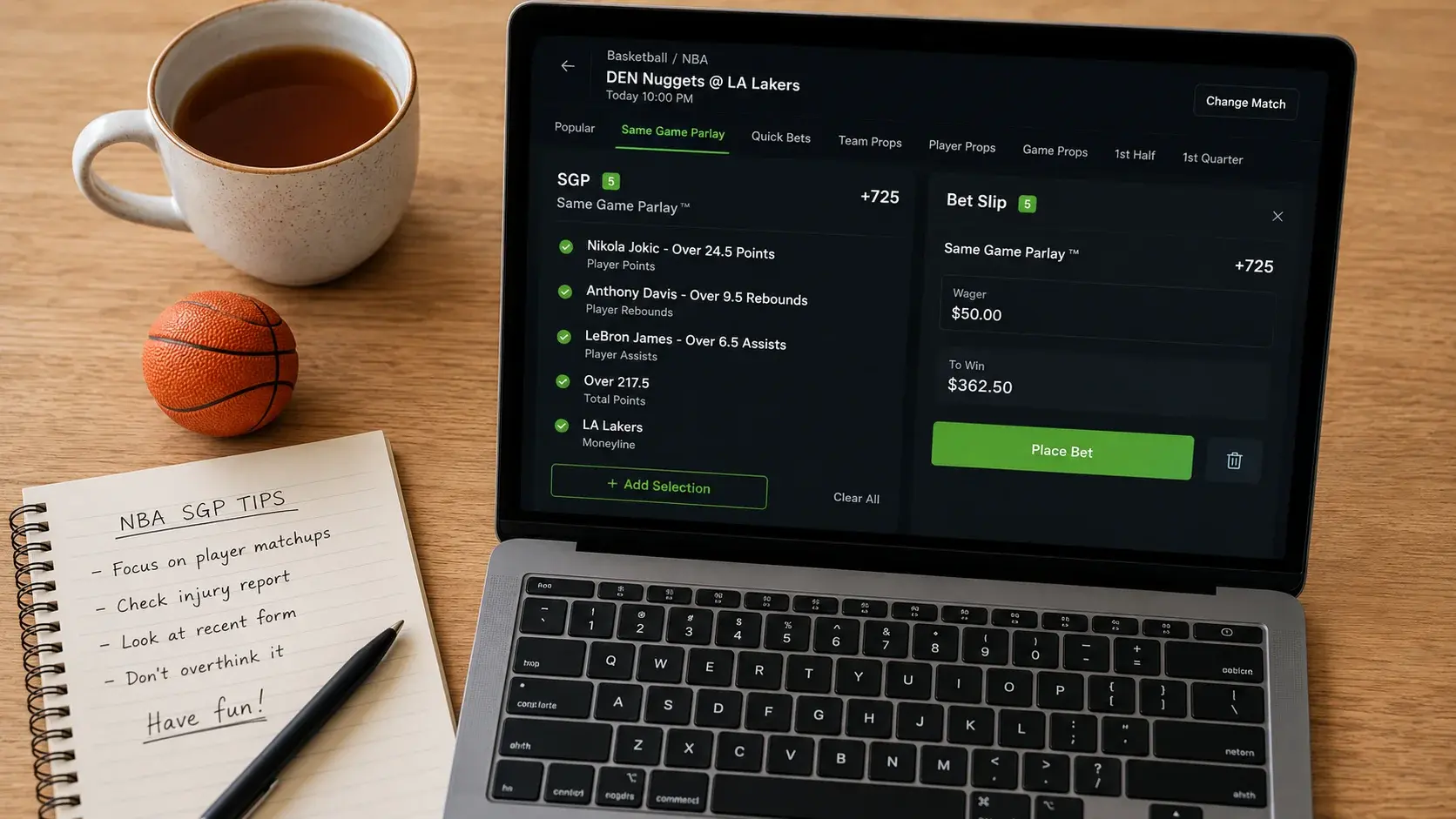
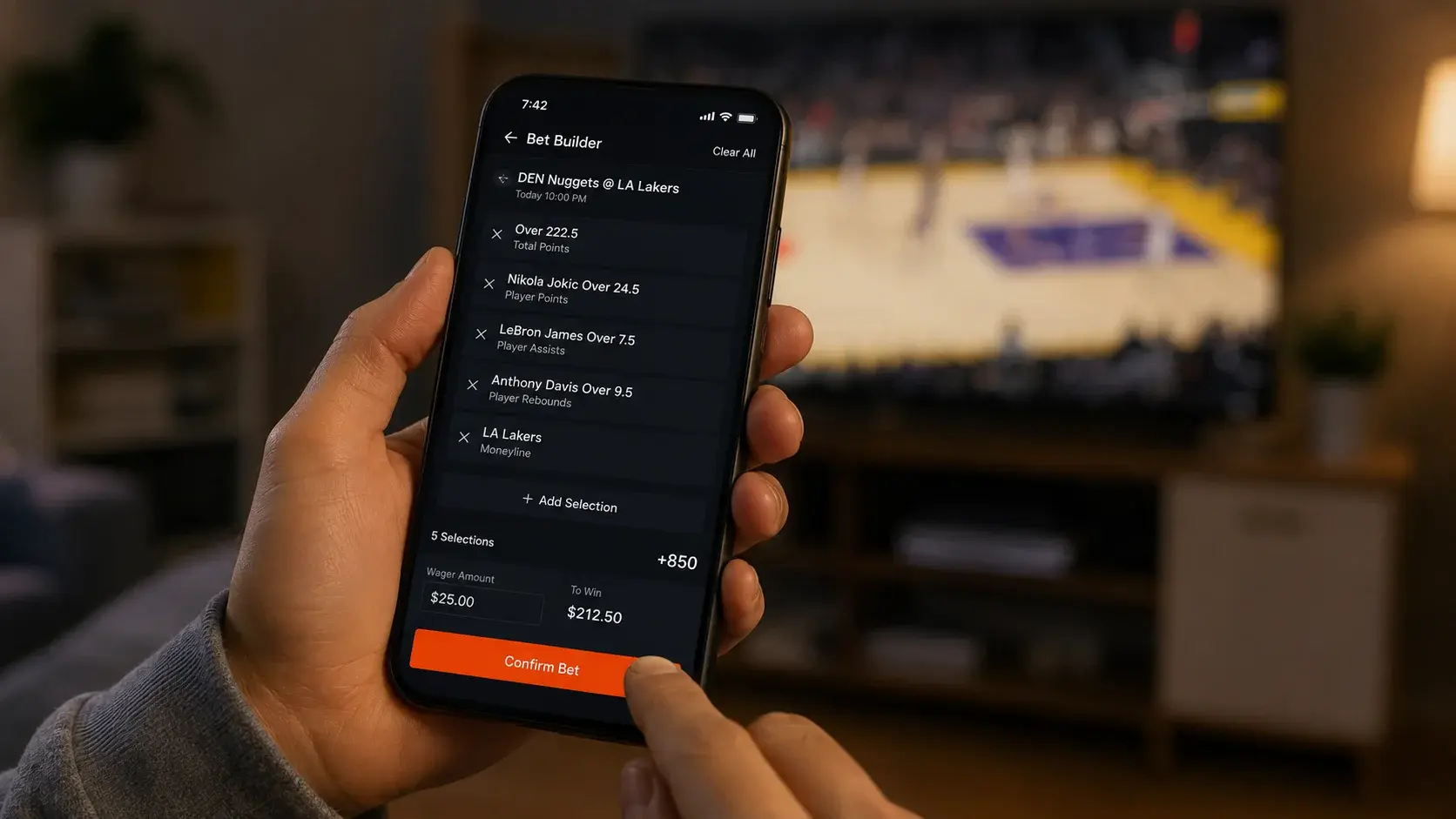
I remember the first time I tried to combine a player prop with a game spread in a standard accumulator and got an error message. The bookmaker would not accept selections from the same match in a traditional multi-bet. That restriction existed because same-game outcomes are correlated, and standard accumulators treat each leg as independent. The bet builder solved this by introducing a pricing engine that accounts for intra-game correlation and lets you combine markets from a single NBA contest.
William Hill captured 37.83% of pay-per-click advertising spend on UK sports betting in February 2026, and bet builders are among the most heavily promoted products across all major operators. The reason is straightforward: bet builders generate higher margins than standard bets because the correlation adjustment and combined pricing give bookmakers room to build in additional profit. For the bettor, the trade-off is clear — you gain the ability to construct a customised, multi-dimensional wager on a single game, but you pay for that flexibility through tighter pricing.
Understanding the mechanics before you start clicking is the difference between using the tool strategically and feeding the margin machine.
Building an NBA Bet Builder: A Five-Step Walkthrough
Step one: pick the game. This sounds obvious, but it is the most important decision. Bet builders reward games where you have a strong analytical view — not just on who wins, but on how the game plays out. If you do not have an opinion on pace, scoring distribution, and individual player performance, you do not have enough information to build a coherent bet builder.
Step two: anchor with a game-level market. Start with a moneyline, spread, or totals selection as the foundation of your bet builder. This anchors your thesis. If you believe the Timberwolves will win comfortably at home, your anchor is the Wolves spread or moneyline. Everything else should logically follow from that scenario.
Step three: add one or two player props that align with your anchor. If your anchor is Wolves -7.5, consider Anthony Edwards over 26.5 points. A comfortable Wolves win likely features a strong Edwards performance. The key is alignment — every leg should reinforce the same game narrative. Adding a player from the opposing team to score heavily contradicts your blowout thesis.
Step four: check the combined odds against your sense of probability. If the bet builder offers 4.50 for a three-leg combination, the implied combined probability is 22.2%. Do you genuinely believe all three outcomes occur together more than 22% of the time? If not, the bet is negative expected value regardless of how well-constructed it looks. With the online segment now accounting for 78.5% of UK sports betting revenue, every bet you place through an app has been priced by algorithms designed to ensure the bookmaker profits. Respect the pricing.
Step five: set your stake relative to confidence and bankroll rules. Bet builders are inherently higher-variance than singles, so your stake should be smaller. I cap bet builder stakes at 1% of my NBA bankroll, compared to 2-3% for flat-staked singles. This protects me from the inevitable losing streaks while allowing me to benefit from the occasional payout.
Market Limits, Void Legs, and Bookmaker Restrictions
Not every combination is available. Bookmakers restrict certain leg pairings within bet builders, and these restrictions vary by operator. The most common blocked combinations involve markets that are too directly correlated — you cannot combine “Team A to win” with “Team A to score the most points,” because the second is a logical consequence of the first in almost every scenario.
Void legs introduce complexity. If an NBA player is ruled out before tip-off and you had a prop bet on that player in your bet builder, the leg is voided. Most UK bookmakers handle this by removing the voided leg and recalculating the bet builder odds on the remaining selections. A three-leg bet builder becomes a two-leg combination at lower odds. This can turn a potentially profitable wager into a barely-worth-it return, so I always check the injury report within an hour of tip-off and adjust my bet builders accordingly.
Maximum payout limits also apply. Most UK operators cap bet builder payouts at a lower ceiling than standard accumulators. If you are building a five-leg combination at 25.00 odds, check whether the potential payout exceeds the operator’s bet builder limit. There is nothing worse than hitting a long-shot bet builder and discovering the payout is capped below what the odds implied.
Bet Builder vs Standard Parlay: Payout Differences
This comparison reveals the true cost of the bet builder format. Take three selections: Team A moneyline at 1.65, Player X over 22.5 points at 1.80, and over 215.5 total at 1.90. As independent events in a standard parlay (if it were allowed), the combined odds would be 1.65 x 1.80 x 1.90 = 5.643. The same three selections in a bet builder typically price out at 4.00-4.80, depending on the bookmaker’s correlation model and margin.
That gap — from 5.64 to roughly 4.40 — represents the cost of same-game combination. You are paying approximately 20% in reduced odds for the privilege of combining intra-game markets. Whether that cost is justified depends entirely on whether your correlation analysis identifies value that overcomes the premium.
I track my bet builder results separately from my singles and standard accumulators. Over three full NBA seasons, my bet builder ROI has been lower than my singles ROI, but positive in seasons where I stuck to the template approach and resisted the temptation to add speculative fourth and fifth legs. Three legs is my hard maximum for bet builders. Beyond that, the margin compression and correlation uncertainty make the maths untenable. For more on structuring your selections, the same-game parlay tips guide covers the correlation logic in depth.