
Quantifying the Decline of the NBA Home Point Edge
For three straight seasons, I blindly backed home teams on the spread whenever I lacked a strong analytical lean. The logic felt bulletproof — crowds matter, travel wears down visitors, referees favour the home side. Then I ran the numbers across my own betting history and discovered I was losing money on that approach at a rate of about 4% ROI. Home court advantage exists in the NBA, but it is smaller, more variable, and more nuanced than the lazy narrative suggests.
NBA attendance surpassed 22.18 million across three consecutive record-breaking seasons through 2025-26. Those packed arenas create genuine atmosphere, but atmosphere alone does not cover spreads. The home winning percentage in the NBA has hovered around 57-59% in recent seasons — meaningful but far below the 65-67% range common in the early 2000s. Bookmakers price home court into the line with precision, and the UK bettor who assumes “home equals edge” without digging deeper is handing money to the market.
Quantifying the Home Advantage in Points
How many points is home court worth? I tracked this obsessively for four seasons. The standard number baked into NBA lines is approximately 2.5 to 3 points. A neutral-site game between two evenly matched teams would be a pick’em. Move it to one team’s arena and the home side gets spotted roughly three points on the spread.
That average masks enormous variation. Denver’s altitude advantage pushes their home edge closer to 4-5 points in certain matchups. Miami’s late-season heat and nightlife have anecdotally contributed to visiting team lethargy, though isolating that variable is difficult. Meanwhile, some franchises in transition — rebuilding teams with half-empty arenas — show home advantages below 2 points. The specific matchup matters more than the generic concept.
What changed the game for me was tracking how bookmakers adjust the home number for specific situations. A home team on the second night of a back-to-back gets less credit. A home team returning from a long road trip gets more. A home team hosting a rival with a rested roster gets less. These micro-adjustments are where the real edge lives, and they shift game to game in ways that a flat “home teams win” rule cannot capture.
Travel, Time Zones, and the Erosion of Visitor Performance
Last February, I noticed the Lakers looked sluggish in the first half against the Hornets — a team they should have handled easily. Then I checked the schedule. Los Angeles had played in Miami two nights earlier, flown across the country, and landed in Charlotte at 3am local time. The NBA’s 82-game schedule creates brutal travel windows, and the teams that suffer most are those crossing multiple time zones on short rest.
West-to-east travel is worse than east-to-west. A Portland team flying to Boston loses three hours, and their body clocks are still on Pacific time when the 7:30pm Eastern tip-off feels like 4:30pm — deep in the afternoon energy dip. The global sports betting market reached $100.9 billion in 2024, but even within that enormous market, surprisingly few bettors systematically track how travel schedules affect NBA lines.
The teams that neutralise travel best are the ones with the deepest rosters. When a team can rest its starters for a game and still field a competitive unit, the physical toll of travel diminishes. Schedule spot analysis overlaps heavily with home court advantage because the two variables interact constantly — a home team facing an exhausted visitor has a compounded edge that often exceeds the standard 3-point home adjustment.
Altitude, Arena Noise, and Crowd Density
I watched the Nuggets dismantle a visiting team in Denver last January, and the broadcast commentary spent the entire fourth quarter talking about altitude fatigue. There is real science behind it. Ball Arena sits at 5,280 feet above sea level, and visiting players who have not acclimatised can experience reduced aerobic capacity. The effect is most pronounced in the fourth quarter, when conditioning separates evenly matched teams.
Arena noise plays a different role. The NBA has measured in-game decibel levels exceeding 110 dB during playoff games — loud enough to impair communication between players. For visiting teams trying to execute complex offensive sets, the inability to hear play calls forces simplification. That simplification often translates into isolation plays and lower offensive efficiency, which bookmakers may not fully price into period-specific markets.
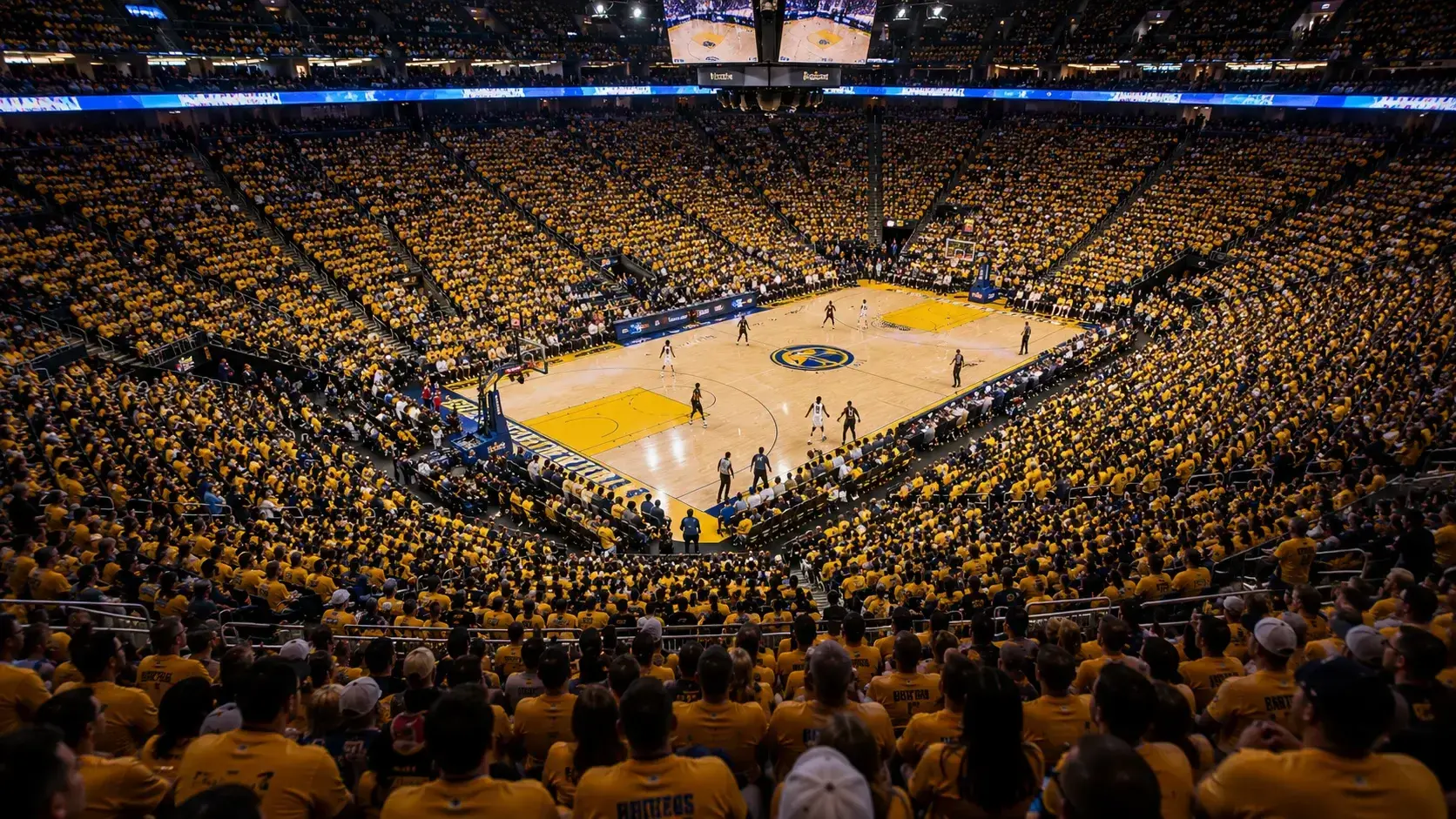
Crowd density is the overlooked variable. A sold-out arena of 19,000 creates a different environment than a two-thirds-full arena of 12,000. The 170 million viewers who watched NBA content across US broadcast and streaming platforms in 2025-26 do not create the same in-arena pressure as a packed house does. When I evaluate home court for betting purposes, I check recent attendance figures — a team drawing consistently below capacity does not generate the same psychological advantage as one selling out every night.
Playoffs vs Regular Season: When Home Court Doubles in Value
Everything I have described intensifies in the playoffs. Home court advantage during the NBA post-season is significantly larger than during the regular season, and the pricing does not always reflect this fully. Playoff crowds are louder, more engaged, and present for every second of every quarter. Players feed off that energy in ways that regular-season Tuesday-night games cannot replicate.
The NBA Finals in 2025 drew 10.2 million average viewers per game, and the atmosphere inside the arena was electric by every account. Game 7 pulled 16.35 million viewers. That level of attention creates genuine home court pressure that elevates role players and destabilises visitors. I adjust my home court value upward by 1-1.5 points for Conference Finals and NBA Finals games, which changes my expected value calculations meaningfully on tight lines.
One specific playoff angle I have found profitable: home underdogs in Game 1. The market tends to overvalue the higher seed in the opening game of a series, particularly when that team earned home court by a narrow margin. A four-seed hosting a five-seed in Game 1 carries genuine home court energy, and the spread often underestimates the lift that first-playoff-game adrenaline provides. It is a narrow spot, but over several playoff cycles it has produced a positive return for me.
When Home Court Advantage Disappears Entirely
There are situations where home court becomes worthless or even negative. The most obvious: a tanking team late in the season. When a franchise has mathematically eliminated itself from playoff contention and is openly resting veterans, the home crowd thins, the energy drops, and the visiting team — often fighting for seeding — plays with more urgency regardless of venue. I actively fade home teams in tanking situations, even when the line seems to offer value.
The second situation is the In-Season Tournament and similar mid-season events. These games often carry a different emotional weight, and home court does not always translate to the same level of engagement. Players are still adjusting to the stakes, and the atmosphere at some of these events has been inconsistent. The bookmaker’s home court adjustment remains constant, but the actual advantage fluctuates.
The third is the classic letdown spot. A home team coming off a huge nationally televised win — say, a statement victory over the league’s best team — and now hosting a bottom-five opponent. The emotional hangover is real, the effort level drops, and the crowd starts flat because the outcome feels predetermined. These are the games where 15-point home favourites lose by six, and the spread bettors who assumed home court would carry the day learn an expensive lesson about motivation dynamics.