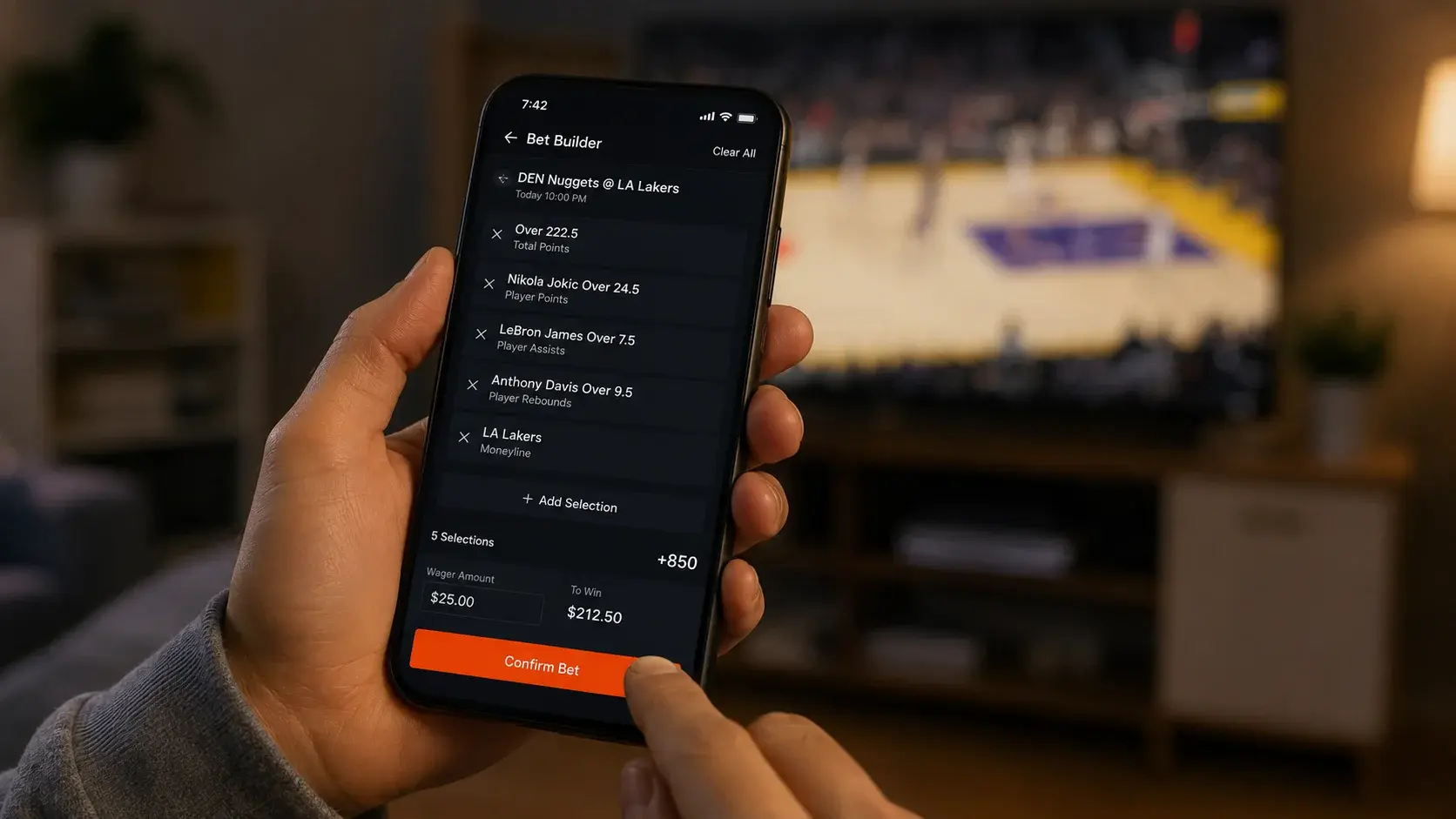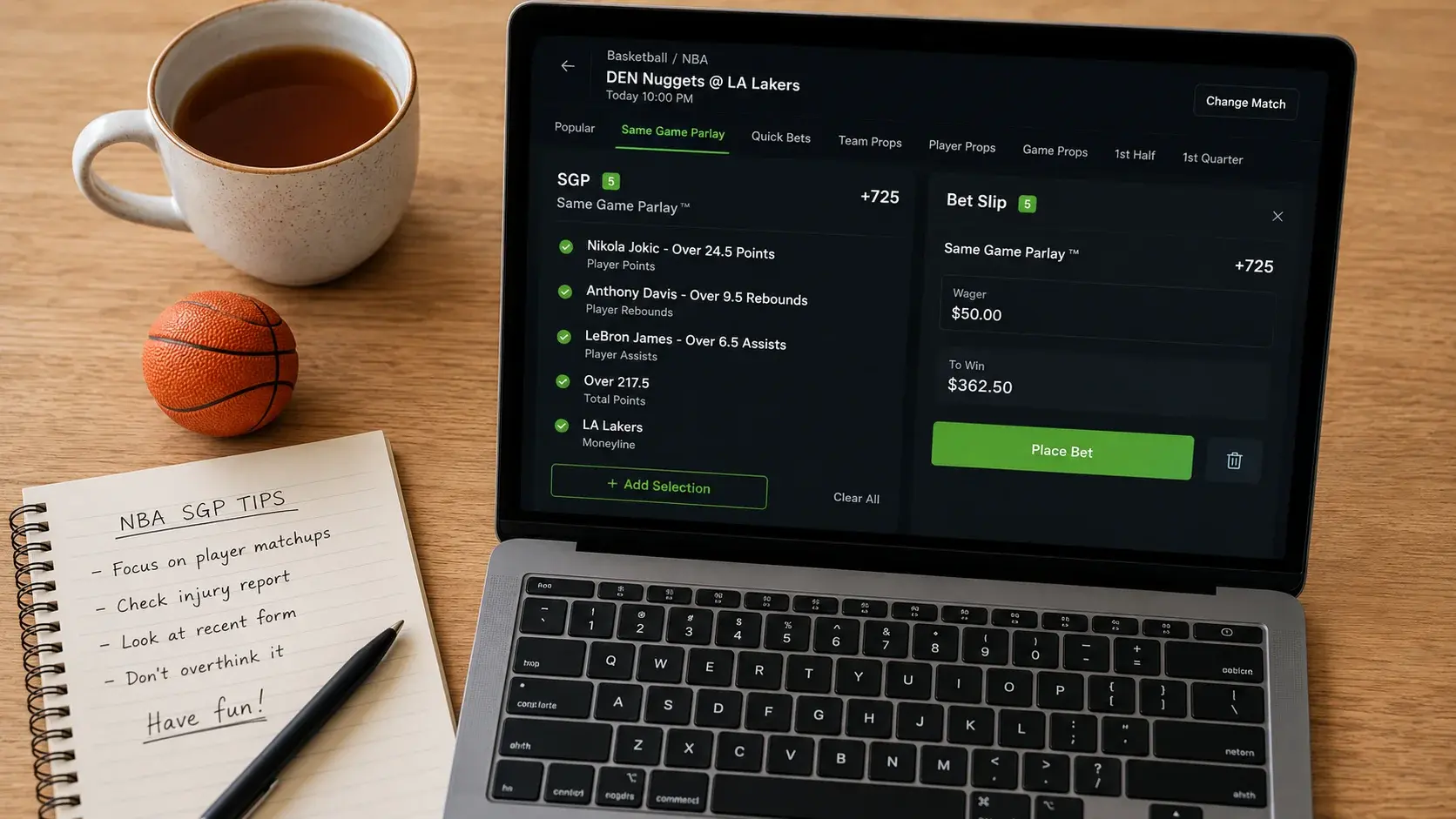


Maximizing NBA In-Play Betting During UK Time Zones
It was 1:30 in the morning, December 2023, and I was watching a Celtics-Bucks game that had gone off-script in the second quarter. Milwaukee’s starting centre picked up his third foul with eight minutes left in the half, and the live spread — which had opened with Boston as 3-point favourites — swung to Boston -7.5 in under ninety seconds. I took Milwaukee at +7.5 because I knew the centre would return in the second half, the Bucks would adjust, and the game would tighten. It did. Milwaukee lost by two. That 5.5-point swing between the pre-match spread and the in-play number was pure value, available for about three minutes, and gone before most casual bettors noticed. Live bettors can find massive edges by utilizing specific NBA quarter betting tips when teams start rotating their bench players.
That is NBA live betting at its best — and the UK time zone makes it uniquely accessible. NBA games tip off between 11:30pm and 3:30am UK time, which means the bulk of the action runs through the early hours. The 2025-26 season drew 170 million viewers across ABC, ESPN, Amazon Prime Video, NBC, Peacock, and NBA TV. The first two weeks of the new season saw a 92% surge in viewership compared to the prior year — the best start in 15 years. More eyeballs, more coverage, more games readily available on streaming platforms, and all of it landing in a time slot where UK bettors who enjoy late-night sport have the market largely to themselves.
The late-night window matters because it thins the competition. During Premier League Saturday afternoons, UK betting markets are flooded with casual money. At 1am on a Tuesday, the NBA live market is populated disproportionately by people who have done their research. That does not make the market easy — it makes it more rational, which is a different thing entirely. A more rational market means fewer wildly mispriced lines, but it also means the mispricings that do appear are genuine opportunities rather than traps.
The remote casino, betting, and bingo sector in the UK generated GGY of 7.8 billion pounds in the year to March 2025, growing by more than 900 million over the prior year. A meaningful slice of that growth comes from in-play betting, which has become the dominant format across every major sport. The NBA’s structure — four distinct quarters, frequent stoppages, and dramatic scoring runs — makes it arguably the best sport in the world for live betting. Each quarter is a fresh market. Each timeout is a recalibration point. Each foul changes the flow.
How NBA Live Odds Move — Quarter by Quarter
The global sports betting market generated $100.9 billion in 2024 and is projected to reach $258.11 billion by 2033. An increasing share of that volume moves through live markets, and the NBA’s quarter-by-quarter structure creates a distinctive rhythm of odds movement that you can learn to read.
First quarter: the live odds move cautiously. Bookmakers are still calibrating based on how the pre-match line is performing against reality. If a 5-point favourite trails by 6 after the first quarter, the live spread might adjust to pick’em or even underdog territory — but not dramatically, because bookmakers know that first-quarter leads in the NBA are among the least predictive of final outcomes in any major sport. A 10-point first-quarter lead produces a win only about 70% of the time. The market reflects this uncertainty with moderate movements and relatively wide margins on the live spread.
Second quarter: the odds begin to sharpen. By the middle of the second quarter, the bookmaker has roughly 18 minutes of game data — enough to update pace, shooting efficiency, and foul differential with real information. Line movement becomes more decisive. If the underdog leads by 8 heading into halftime, the live spread inverts significantly. Halftime is the single biggest inflection point for live odds in an NBA game because it provides a clean reset: both teams go to the locker room, adjustments are made, and the second-half line is essentially a new market. I do more live betting around halftime than in any other window.
Third quarter: historically, this is where the favourite reasserts control. NBA data over the past five seasons shows that pre-match favourites outscore their opponents in the third quarter more often than in any other period. The explanation is coaching — the favoured team, which usually has the better coaching staff, makes superior halftime adjustments. Live odds during the third quarter often swing rapidly as the pre-match favourite closes the gap or extends a lead. If you are looking for live value on the underdog, the third quarter tends to be the worst time to buy.
Fourth quarter: volatility peaks. The live odds in the final period move faster and wider than in any other quarter because every possession has amplified significance. A three-pointer that cuts a lead from 7 to 4 with five minutes remaining triggers a cascade of recalculations. The bookmaker’s algorithms update in real time, but they are reacting to events that have already happened — which creates a perpetual lag between what you see on screen and what the market reflects. This lag is the central tension of all live betting, and it accelerates in the fourth quarter.
Over 1.3 billion hours of live NBA streaming were consumed globally during the 2025-26 season — a 93% increase year-on-year. That explosion of viewership has produced an explosion of live betting data, which in turn has made the algorithms faster and the live lines tighter than they were even two seasons ago. The window of opportunity in live NBA betting is narrower than it has ever been, but it still exists. The key is understanding that you are not competing against the algorithm — you are competing against its limitations, which are concentrated in moments of rapid change, unexpected events, and structural shifts that models are slow to incorporate.
Live Markets Available at UK-Licensed Bookmakers
When I started live-betting the NBA from the UK in 2015, the in-play menu was embarrassingly thin: moneyline, spread, and total. That was it. Now the live offering at major UK-licensed operators runs to 30 or 40 markets per game during play, and the depth keeps expanding season over season.
The core live markets remain the most liquid and tightly priced. The live moneyline (next team to win) adjusts continuously throughout the game. The live spread resets at every stoppage, reflecting the current score differential and remaining time. The live total — over/under on final combined points — recalculates based on the scoring pace established so far. These three markets carry the lowest margins in-play and are where I concentrate the majority of my live betting activity.
Beyond the core, UK operators have introduced period-specific markets that are particularly well-suited to NBA’s quarter structure. You can bet on the winner of each remaining quarter, the total points in the current quarter, and the margin of the current quarter — all updating in real time. Quarter-specific betting angles represent one of the less efficient corners of live NBA markets because bookmakers allocate less modelling resource to them than to full-game lines.
Player props are increasingly available in-play, though with important limitations. Most operators offer live scoring props (will Player X finish over/under a revised points line) and sometimes assists and rebounds. The lines update less frequently than game-level markets, meaning they can lag behind the action by several minutes. I have seen a player’s live scoring prop remain unchanged for three or four minutes during a quarter where that player has scored 8 points in a single run. The delay creates exploitable windows — brief ones, but real.
Race-to markets have become popular: which team reaches 50 points first, which team reaches 100 first. These are essentially pace bets disguised as outcome bets. If you have a view on the scoring pace of the game (high pace means the leading team reaches milestones faster), race-to markets can offer value that the standard live total does not capture.
Next-event markets — next team to score, next scorer, next three-pointer — are available at some UK operators but carry high margins. The bookmaker prices these with significant overround because the events are essentially random (who hits the next shot depends on game flow that is unpredictable on a possession-by-possession basis). I treat these as entertainment bets, not analytical ones.
Stream Delay, Data Latency, and the Speed Disadvantage
NCAA President Charlie Baker made an observation about mobile betting that applies equally to live NBA wagering: the phone changed everything, and nobody in 2018 was thinking about how fast the whole thing would end up in the palm of your hand. That speed — the ability to place a live bet in three taps while watching a game on another screen — is both the appeal and the danger of in-play NBA betting.
Every stream you watch in the UK carries a delay. NBA League Pass runs roughly 30 to 60 seconds behind real time. TNT Sports and Sky Sports broadcasts carry a similar lag. Even the fastest legal streams are at least 15 seconds behind what is happening on the court. The bookmaker’s odds feed, by contrast, updates based on real-time data from the arena — courtside feeds and official scoring data that arrive with near-zero latency. The result is a structural disadvantage: the bookmaker knows a basket has been scored before you see it on your screen.
This delay matters most during high-leverage moments. If a team goes on a 10-0 run, the live spread will have adjusted fully before your stream shows the last two baskets of that run. You see what feels like a buying opportunity — the underdog is only down 6, the live spread says +9 — but the spread has already priced in the 10-0 run while your screen is still showing the score at 4 down. By the time your stream catches up, the line has moved further and the value has evaporated.
How do I manage this? Three principles. First, I never place a live bet in reaction to what I just saw on screen. If a dramatic play triggers my impulse to bet, I wait at least 60 seconds before acting — long enough for the stream delay to wash out and for the live line to settle. Second, I use play-by-play text feeds alongside the video stream. Text-based play-by-play from the NBA’s official feed updates faster than video and gives me a clearer picture of real-time game state. Third, I do my live betting during stoppages — timeouts, free throws, end of quarters — when the game pauses long enough for the stream delay to become irrelevant and the live line to stabilise.
Reading Momentum Swings: Runs, Timeouts, and Foul Trouble
Nobody who watches basketball regularly believes momentum is an illusion. The analytics community spent years trying to disprove “hot hand” theory before eventually confirming that it exists, even if it is smaller than intuition suggests. For live NBA betting, momentum is not an abstract concept — it is the single most important input you cannot quantify.
An NBA scoring run — defined as one team outscoring the other by 8 or more points in a stretch without a meaningful response — triggers predictable behaviour from both the live betting market and the trailing team’s coaching staff. The market overreacts to runs in real time, moving the live spread further than the underlying game state justifies. The trailing coach calls a timeout, adjusts the defensive scheme, and the scoring run typically stalls. I have tracked this pattern across hundreds of games: after a timeout following an 8+ point run, the team that was on the run is outscored in the next three minutes roughly 55% of the time. The momentum breaks, the live spread has overextended, and the trailing team at the inflated number represents value.
Foul trouble creates a different but equally exploitable dynamic. When a team’s best player picks up their fourth foul in the third quarter, they typically sit for the remainder of the period. The live spread adjusts — but by how much? In my experience, the market consistently overvalues the impact of a single player sitting in foul trouble, because it prices in the current absence without adequately pricing in the return. A star sitting with four fouls will come back in the fourth quarter, and the team usually manages to tread water during the absence because the coach shortens the rotation and increases effort.
The exception is when the player in foul trouble is the team’s only above-average defender. Losing a rim protector to foul trouble, for instance, changes the game’s defensive structure in ways that do not reverse when the player returns. The opposing offence gains confidence attacking the paint, and that confidence persists even after the defender checks back in. These situations — where the foul trouble causes a structural shift rather than a temporary absence — are where the live spread adjustment is justified and I do not fade it.
Injury exits produce the sharpest and most exploitable live odds movements. When a key player leaves the game with an injury, the live spread swings immediately and substantially. But the initial swing is almost always an overreaction. The bookmaker does not know the severity of the injury in real time — they see the player leave the court and price in a worst-case scenario. If the player returns after treatment (a rolled ankle, a finger jam, a minor knock), the line snaps back. If the player is ruled out, the line settles at a new level. The minutes between the exit and the official update are the most valuable live betting window in any NBA game. I do not bet on the initial swing. I wait for the update and bet on the correction.
Cash-Out and Early Payout During Live NBA Games
The cash-out button is the single most psychologically powerful feature in live betting, and the bookmaker knows it. Cash-out allows you to settle a bet before the game finishes, locking in a profit if your bet is winning or cutting your loss if it is going against you. The price offered is always worse than the true mathematical value of your position — the bookmaker builds a margin into every cash-out offer, typically 5-10% below fair value.
I use cash-out sparingly, and almost never when my bet is winning. The temptation to lock in profit during a live game is enormous, especially at 2am when your eyes are tired and the underdog you backed has clawed a 12-point lead down to 3. But the cash-out offer in that moment is pricing in your anxiety, not the probability. The bookmaker is offering you less than your bet is worth because it knows you are emotionally inclined to take the money.
Where cash-out makes genuine mathematical sense is in limiting losses on bets that have gone catastrophically wrong. If you took the over on a game total and the first quarter produces 38 combined points in a game lined at 225.5, the pace suggests the total will fall well short. Cashing out for a partial return — recovering 40-50% of your stake instead of losing it entirely — can be the right call, because the probability of recovery is negligible and you are reallocating capital to a more productive use.
Early payout features, available at some UK operators, work differently. These automatically settle your bet as a winner if a team builds a specified lead — typically 20 points in NBA markets. The bet pays in full regardless of what happens after that point. I view early payout as a free insurance policy. It does not change my analysis or my bet selection, but it adds a small positive edge: I win in scenarios where my team builds a big lead and then collapses, which happens more often than you would expect in NBA games where starters are rested in blowouts.
The discipline required for live cash-out decisions is harder than any analytical skill in this guide. No formula will tell you when to press the button. What I can tell you is that every time I have cashed out a winning bet because I was “nervous,” I have regretted it by the end of the week. And every time I have cashed out a losing bet because the probability had genuinely collapsed, I have been glad I did. The difference is whether you are acting on emotion or on updated information. If you cannot tell the difference in the moment, do not touch the button. Track the momentum shifts and find the most accurate analysis on the best NBA betting site in the UK.