
Adjusting Over/Unders Based on NBA Crew Assignments
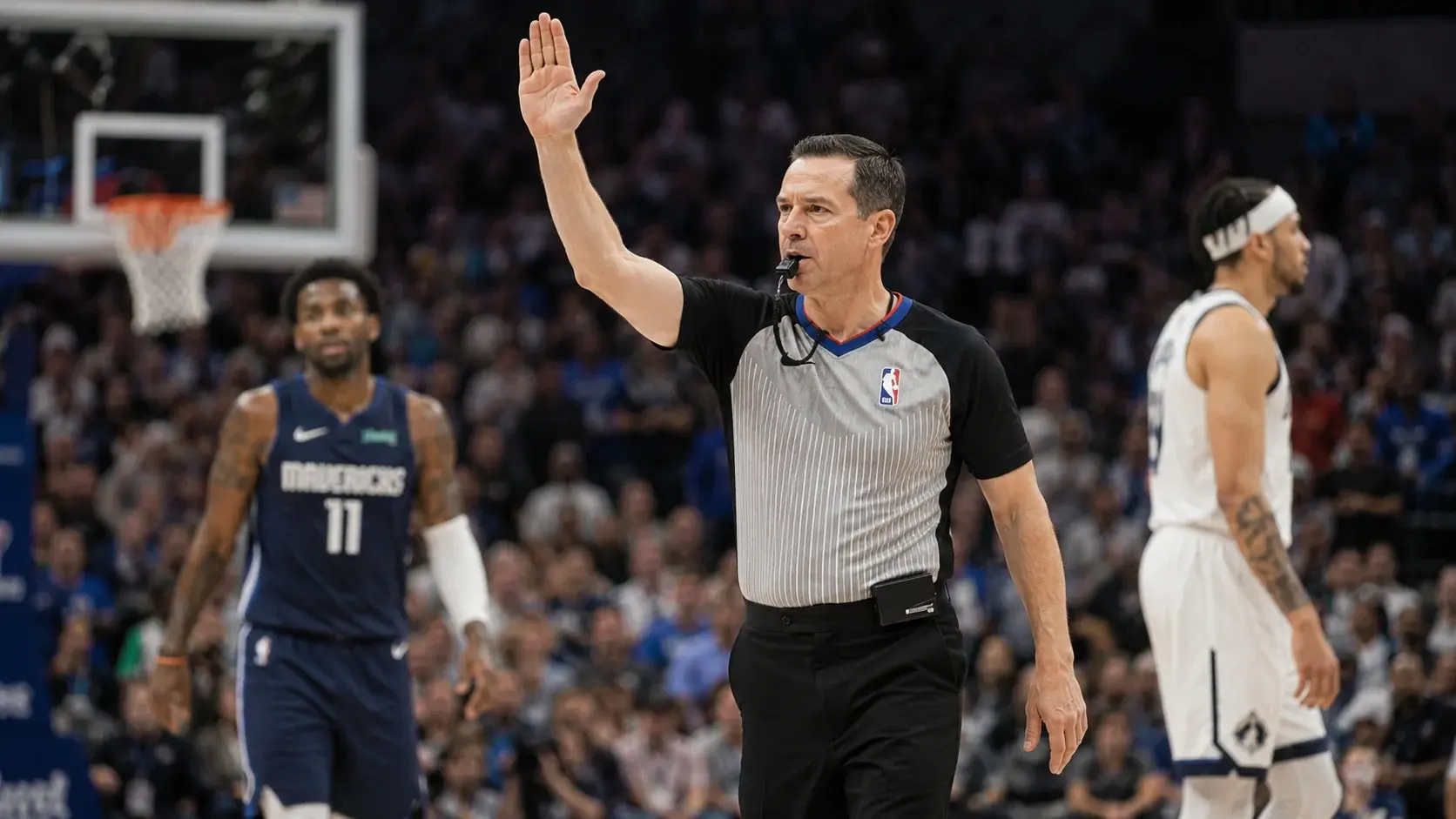
I remember pulling up an NBA totals line one afternoon and seeing it at 221.5. Three hours later, the referee crew assignment dropped and the line moved to 225.5 without a single injury update or lineup change. Four points of movement driven entirely by three officials walking onto the court. That was the moment I started tracking referee data as a core part of my betting process, and it has been one of the most consistent sources of edge I have found in over a decade of NBA wagering.
NBA referee assignments are published by the league roughly 9am Eastern time on game day — that is 2pm in the UK. The information is public, free, and available to anyone who cares to look. Yet the vast majority of the 290 million monthly bets placed across UK platforms are made without any consideration of who is officiating. The bettors who do track referee tendencies have a structural advantage, and the data to exploit it is not hidden behind a paywall or buried in obscure databases. It is sitting on the NBA’s own website.
Fouls Per Game and the Totals Connection
Every NBA referee has a statistical fingerprint. Some officials call tight games — more fouls, more free throws, more stoppages. Others let teams play through contact, resulting in fewer trips to the line, faster pace, and different scoring dynamics. The range is wider than most bettors assume. The highest-foul crews average 44-46 personal fouls per game. The lowest average 38-40. That six-foul gap translates into roughly 8-12 additional free throw attempts, which directly affects the total.
Free throws are the connection point. Each foul that results in free throw attempts adds expected points to the game total, and certain referee crews consistently produce higher free throw rates than others. When a high-foul crew is assigned to a game between two teams that already attack the basket aggressively, the totals line may not fully account for the compounding effect. The bookmaker adjusts for team tendencies but may underweight the additional foul inflation from the specific crew.
I maintain a simple spreadsheet that tracks each NBA referee’s average fouls called per game and average free throw attempts per game across the current season. Before placing any totals bet, I check the crew assignment and compare the crew’s foul profile to the game’s base total. If the crew’s profile suggests 6-8 more free throw attempts than average and the total has not moved to reflect it, the over carries value. The reverse is equally true — a low-foul crew on a game with an already-tight total pushes the under into value territory.
Home Whistle Bias and Spread Implications
The concept of a “home whistle” — referees unconsciously favouring the home team through marginal calls — has been studied extensively. The data shows a real but small effect: home teams receive approximately 1.5-2 more free throw attempts per game than visitors across the league. This is already baked into the standard home court advantage, but the size of the home whistle varies by referee.
Some officials show a stronger home bias than the league average, while others are remarkably neutral. When a referee with a pronounced home whistle pattern is assigned to a game where the home team plays an aggressive driving style, the spread may not fully reflect the compounded advantage. The home team gets more calls, more free points, and more opportunities to disrupt the visitor’s rhythm through foul trouble.
Adam Silver has spoken about the league’s ongoing efforts to work with betting companies and implement controls to protect competition integrity. The referee assignment process is part of that framework — crews are assigned by the league office, not by teams or broadcasters, and the assignments are designed to avoid conflicts of interest. But the statistical tendencies of individual referees are not a manipulation issue; they are a natural variation in how different officials interpret the rulebook, and that variation creates legitimate betting angles.
Pace of Play and Referee Influence on Game Flow
Referees affect pace in ways that go beyond foul calls. A crew that calls frequent violations — travels, lane violations, out-of-bounds disputes — produces more dead-ball situations, which slow the game’s natural rhythm. Teams that rely on fast-break points and transition offence are disproportionately affected by crews that interrupt flow, because their primary scoring mechanism depends on continuous action.
I track this through a metric I call “dead-ball rate” — the number of non-shooting stoppages per 48 minutes for each referee crew. High dead-ball crews suppress pace-dependent offences and favour half-court teams. Low dead-ball crews let the game run, which benefits athletic, transition-heavy squads. When a high-pace team faces a half-court team with a high dead-ball crew assigned, the pace advantage narrows, and the spread should reflect the slower-than-expected game environment.
This is a second-order effect that most bettors — and many bookmakers’ models — overlook entirely. The totals market is where the dead-ball rate creates the most value, because pace is the primary driver of scoring volume, and anything that systematically alters pace changes the expected total. A two-possession reduction in pace from a high dead-ball crew translates into roughly four fewer points on the total — enough to flip the value on a tight line.
Playoff Refereeing and the Tightened Whistle
Everything changes in the playoffs. The NBA assigns its most experienced officials to post-season games, and those officials systematically call fewer fouls than the regular-season average. The reasoning is partly cultural — playoff basketball is “supposed” to be more physical — and partly practical — experienced officials are more comfortable letting marginal contact go in high-stakes situations.
The NBA Finals in 2025 drew 10.2 million average viewers per game in the US, with Game 7 reaching 16.35 million. The officials assigned to those games called tighter defence and fewer marginal fouls than the regular-season crews, and the scoring reflected it. Playoff unders have historically hit at a higher rate than regular-season unders, and the tightened whistle is a significant contributing factor alongside the improved defensive intensity from teams playing seven-game series.
For UK bettors approaching playoff totals, I apply a blanket 2-3 point reduction to my regular-season totals model to account for the playoff officiating adjustment. This sounds crude, but it has been remarkably consistent across multiple post-seasons. The bookmaker’s line often starts closer to the regular-season expectation and only adjusts after the first game or two of a series produces lower-than-expected scoring. Getting ahead of that adjustment in Games 1 and 2 has been one of my most reliable playoff approaches.
Where to Find Referee Data and How to Use It Efficiently
You do not need expensive software or proprietary databases. The NBA publishes referee assignments on its official website on game day. Historical referee statistics are available through free basketball reference sites that track fouls called, free throw rates, and home-away splits for every active official. Building a usable referee database takes about two hours at the start of the season and fifteen minutes of maintenance each week to update with new game data.
My workflow on game day: check the referee assignment at 2pm UK time, cross-reference each official’s season averages against the league mean, and flag any game where the crew’s foul profile deviates significantly from the baseline used to set the total. If the deviation is strong enough — a crew averaging four more fouls per game than the league mean on a game where I already lean over — I add the referee data as a confirming factor. I never bet on referee data alone, because the variance within any single crew’s performance is too high. But as a secondary signal layered on top of team-level analysis, it sharpens my edge meaningfully.
The entire process adds ten minutes to my pre-bet research routine. Ten minutes for a data source that most bettors ignore entirely. That is the kind of asymmetry that keeps me profitable over the course of an 82-game season — not because any single insight is enormous, but because stacking small advantages compounds into something the bookmaker’s margin cannot erode.